
Getting started
Your first pottery class: a guide to getting started
What to wear, how to choose a first project, and what to expect between arriving at the table and collecting your finished piece.
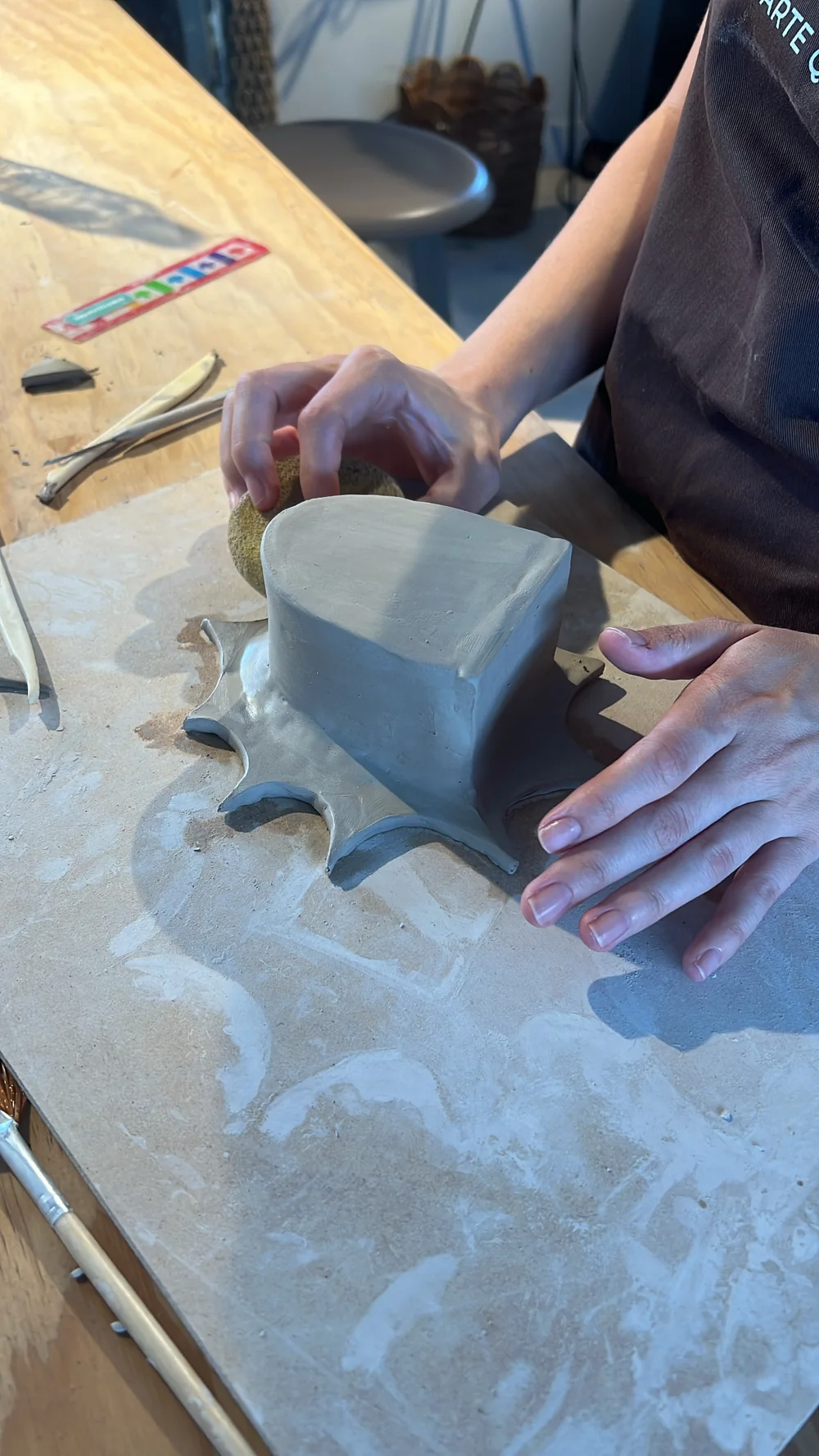
Start with curiosity, not a finished design
A first pottery class asks you to do something that can feel unfamiliar: learn through your hands. You may know exactly what kind of cup you love, yet have no idea how to make one. That is a useful place to begin. Bring an idea if you have one, but leave room for the material, the available technique, and the instructor’s guidance to change the plan.
Choose one thing you would like to understand by the end of the session. It might be how to make an even wall, how to join two pieces, or what centering feels like on the wheel. A small, clear learning goal gives you something to notice even when your first piece looks different from the picture in your head.
Choose a class that fits the experience you want
Handbuilding and wheel throwing offer different experiences. Handbuilding lets you shape, join, and texture clay on a work surface. The wheel introduces a rotating form and coordinated movements. Neither requires you to arrive as an artist. Tell the studio what interests you and confirm which technique is being taught on your chosen date.
Cielina’s regular classes last three hours and have a maximum of six students. Check the calendar for the date and time that suit you. If you need instruction in a particular language, an accessible workspace, or an adjustment to how you participate, discuss that before reserving so you can make a comfortable plan. Confirmed wheel prices are MX$700 for one class, MX$2,650 for four, or MX$4,650 for eight. Handbuilding is MX$600 for one, MX$2,250 for four, or MX$4,000 for eight. Packages expire four weeks from payment, so check the schedule before choosing one. Each visit requires a reservation.
Wear clothes that let you work comfortably
Choose washable clothes you can move in and do not mind marking with clay. Sleeves that stay above your wrists leave your hands free. Tie back long hair and consider removing rings or bracelets before you work. Keep anything precious somewhere secure rather than on the edge of the table.
Bring less than you think you need. A reference image and your questions can be more useful than a bag of unfamiliar tools. Confirm the studio’s footwear guidance and whether an apron, clay, tools, and firing are included. There is no need to buy equipment before you understand how the class is organized.
Give your first project a manageable shape
A small bowl or simple dish can teach you a great deal. A tall vase with a narrow neck, delicate handle, and elaborate decoration asks you to solve several problems at once. Describe the part of your idea that matters most: the silhouette, the texture, or the feeling of holding it. The instructor can help you simplify the rest.
For example, if you want to make a favorite breakfast cup, your first session might focus on the cup’s body. Handle design, finishing, and suitability for hot drinks belong in the same conversation, but they do not all have to be solved in your first hour. Ask what the complete project would involve before committing to it.
Expect demonstrations, experiments, and pauses
Watch a demonstration once before trying to remember every movement. When you begin, work slowly enough to notice what changes. Ask for help at the point where something starts to feel different, rather than waiting until you have made ten more corrections. Describing what you feel is useful: the clay is sticking, the rim is thinning, or the shape is leaning.
Give yourself permission to stop and look. Constant smoothing can become a habit that hides what you are learning. A photograph or a quick note about a useful adjustment helps you remember the session. Leave time for the studio’s cleanup routine and ask where unfinished work should be placed.
Know what happens after you leave
A freshly shaped object is usually the beginning of a longer process. Drying, finishing, firing, glazing, and cooling may happen on different days. Confirm whether you need to return, how collection works, and how the studio will contact you. If you are visiting Querétaro, share your departure date before booking.
Your first class does not need to produce a perfect object to be worthwhile. Notice which part made you curious enough to try again. That is a good starting point for choosing your next project—and for making something that feels increasingly like your own work.
A simple plan for arriving and leaving
Before your visit, make a short note with the session date, the studio’s address, the technique you want to try and any questions you have already discussed. Save the booking confirmation somewhere easy to find. A payment receipt, a message asking about availability and a confirmed reservation are different things; check which one you have before making the journey. If something is unclear, contact the studio while there is still time to resolve it.
On arrival, ask where to put your belongings and which work area to use. Give yourself a moment to look at the tools before picking them up. It helps to begin with a clean, simple setup rather than collecting every tool in reach. If you brought a reference, explain what you like about it in one sentence. That gives the instructor a useful starting point without turning the whole class into an exercise in copying.
Near the end, ask the instructor to look at the piece before you make a final adjustment. Find out how it should be identified and where it will stay. Record anything you will need later: the next stage, whether another visit is necessary and how the studio will tell you that collection is possible. Take a photograph if permitted, but do not lift or move a fragile piece just to get a better angle.
Leave with one observation about your own practice. Perhaps a slower movement helped, or a smaller shape made the task easier to understand. That observation is a more useful starting point for a second class than deciding whether the first object was perfect. Ask what you could practice next and choose a manageable step.