
Care & safety
Caring for handmade pottery: a useful routine for your piece
How to handle, store, clean, and ask the right questions about a handmade object without assuming every ceramic piece has the same needs.
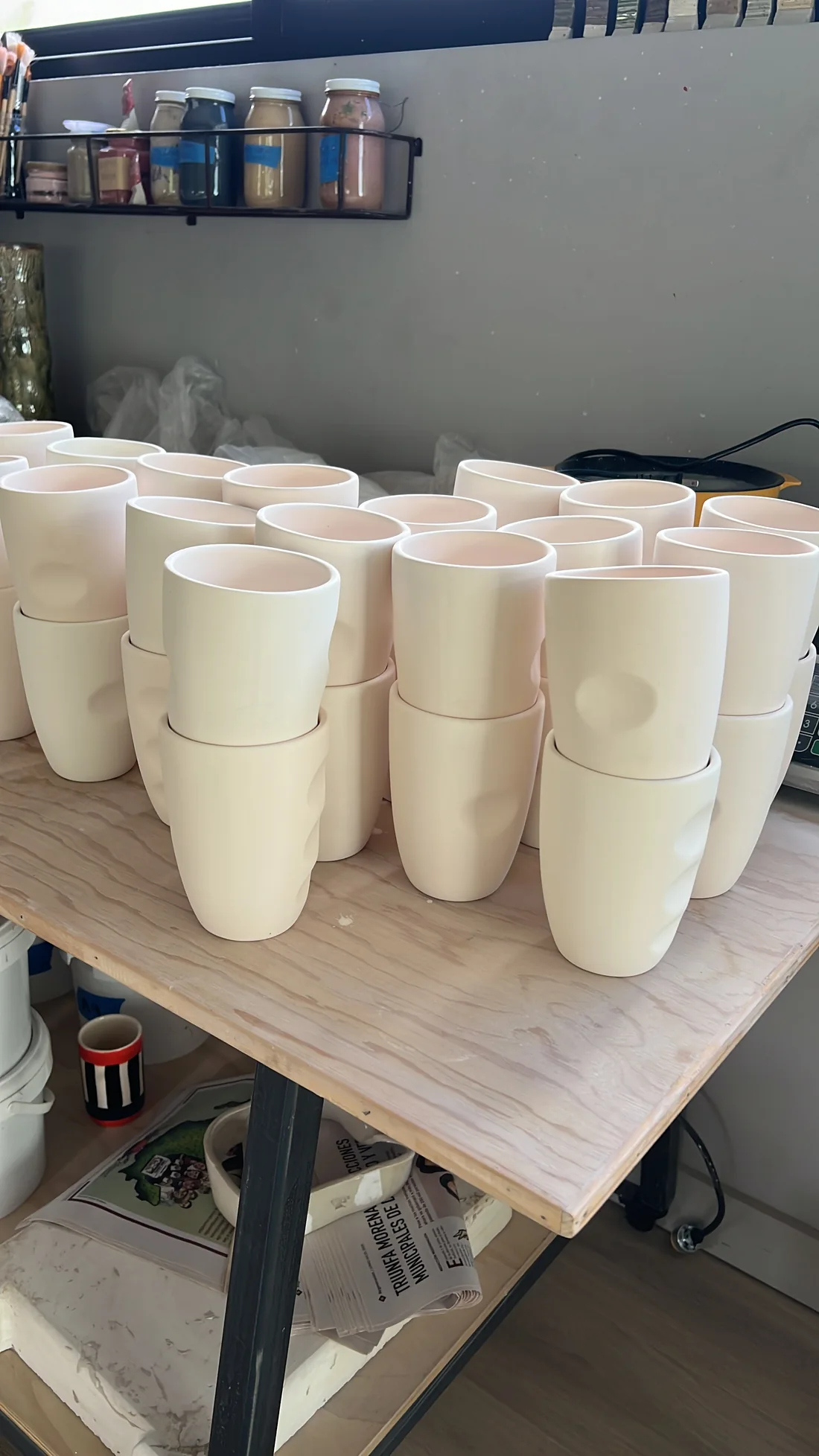
Begin with the piece you actually have
Handmade pottery includes decorative objects, vessels, tableware, sculpture, and many different finishes. A care routine should begin with the intended use of your particular piece. Ask the maker or studio how it was meant to be used and keep any written guidance. Shape alone is not enough: an object that looks like a cup is not automatically intended for hot drinks.
If you made the piece in class, record what you know about the clay and finish. If you bought it from the gallery, keep the listing or care information with your purchase record. Those details will be useful if you ask a question later or give the piece to someone who did not hear the original explanation.
Give the object support when moving it
Before lifting a piece, make room where you plan to put it. Support the body and base rather than relying on a delicate rim, handle, or attached decoration. Take extra care with loose lids and separate parts. Moving one object at a time is often simpler than carrying a collection that can knock together.
Think about everyday habits that create awkward moments: reaching over a sink, moving a vase while holding a phone, or sliding a bowl past the edge of a shelf. A small change in how you arrange the space can protect the object more effectively than trying to rescue it after it begins to slip.
Confirm cleaning before choosing a method
Ask whether the piece can be washed, what products are appropriate, and whether any surface needs special treatment. Do not assume that soaking, scrubbing, or an abrasive cleaner is suitable for every ceramic finish. Decorations, exposed clay, repairs, and existing damage can change what is appropriate.
For a piece confirmed as suitable for ordinary hand washing, follow the maker’s instructions and leave enough room that it will not collide with other objects. If a finish behaves unexpectedly—such as an area loosening, flaking, or changing—stop and ask for advice about that piece. Avoid improvising a strong chemical treatment to remove a mark whose cause you do not know.
Ask separate questions about appliances
Food contact, microwave use, dishwasher use, and oven use are separate questions. Permission for one does not automatically answer the others. Ask specifically about the use you have in mind and follow the guidance for the finished object. A glossy glaze or a sturdy feeling in your hand is not a substitute for that information.
Be clear about temperature changes too. A container used at room temperature and a dish moved between hot and cold conditions face different demands. If you want a piece for baking, reheating, or regular hot drinks, discuss that before buying or making it. Until its suitability is confirmed, choose a use that matches the information you have.
Choose a stable place to keep it
Set pottery on a level, stable surface with enough space around it. Keep fragile rims and handles away from frequent contact. For pieces with different shapes, arranging them side by side may be more suitable than stacking. If you do stack items designed for it, ask how to protect their surfaces and avoid unnecessary weight.
A display shelf also needs to suit the household. Consider passing elbows, a moving curtain, children, pets, and the way doors or drawers open nearby. A tall vessel on a narrow ledge asks for different planning from a low bowl on a broad table. Good placement lets you enjoy the piece without handling it constantly.
Notice changes and pass care information along
Check the object occasionally for chips, cracks, rough areas, or loose attachments, especially before food or drink use. If something changes, set the piece aside and ask whether it remains suitable for its intended purpose. A repair that looks neat does not automatically restore its original strength or suitability.
When you give handmade pottery as a gift, include its care guidance and explain any limits. That small addition makes the object easier to enjoy. Caring for a piece is not about treating every cup like a museum artifact; it is about understanding the object in front of you and building a few comfortable habits around it.
Keep care information with the object
When you collect or buy a piece, make a short care note using the maker’s answers. Include the intended use, cleaning instructions and any specifically confirmed appliance suitability. Keep unanswered questions marked as unanswered. It is better to ask again than to turn a guess into a household rule that gets repeated to everyone who uses the object. A photograph of the piece can help connect the note to the right item.
If you share a home, explain any handling instructions to the other people who may put the piece away or clean it. Think about where it will live and how often it will be moved. A shelf that looks attractive may still be inconvenient if reaching another object means lifting a delicate handle or balancing several pieces together. Arrange the space around the object’s form, not only its color.
Before trying to remove a stubborn mark, identify what you are seeing and ask for guidance. Avoid choosing a cleaning treatment solely because it worked on a different ceramic object. If the piece has changed, send the maker a clear description and a photograph when appropriate. Do not assume that an improvised repair restores its original intended use.
For gifts, include the care note and say whether any questions remain open. A recipient should not need to identify a clay body or glaze by appearance to use the gift thoughtfully. Clear information makes the object easier to live with and preserves the connection between the person who made it and the person who will care for it.