
The process
Choosing a pottery glaze: color, texture, and the finished surface
Learn how to read a glaze sample, discuss your intended use, and make a thoughtful finish choice before your piece goes back into the kiln.
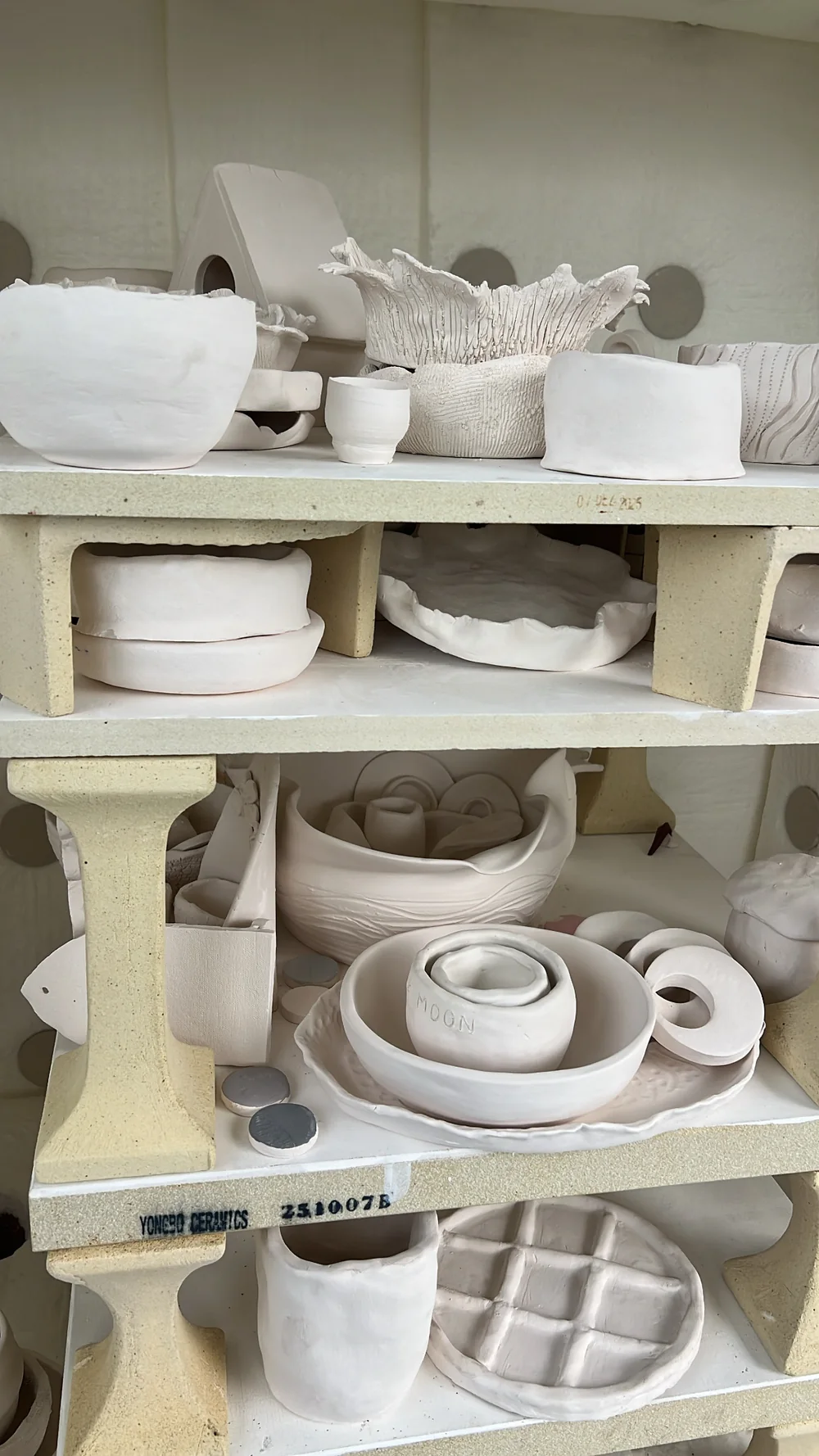
Describe the surface you want to live with
Choosing a glaze can feel like choosing a paint color, but a ceramic finish involves more than color alone. Think about the whole surface: quiet or lively, glossy or matte, smooth or visibly textured. Consider how much of the form you want the finish to emphasize and whether you prefer a simple surface or noticeable variation.
Start with one clear description. You might want a warm neutral bowl with a calm surface, or a small decorative vessel where the texture remains visible. These examples describe a direction without promising that a particular glaze will produce an exact result. Show the studio the piece and explain what you hope to notice when you look at it.
Look at fired examples
The material in a glaze container can look quite different from the fired surface. Use the studio’s fired samples when discussing a finish. Ask whether a sample uses the same clay as your piece and whether it demonstrates one glaze or a combination. Those details make the sample more useful than a color name alone.
Look closely at edges, grooves, and raised areas. A glaze may appear different where its thickness changes or where the underlying form catches the light. If your piece has carving or a textured surface, ask how the finish could affect those details. A sample on a different shape is guidance, not a guarantee of an identical appearance.
Keep the first combination simple
A single approved glaze can be a useful first choice because it gives you fewer variables to understand. Layering several finishes introduces new questions about compatibility, application, and movement during firing. Do not mix or overlap materials simply because their unfired colors look attractive together.
If you want more than one finish, explain where each should appear and ask the instructor what combinations are suitable. Try to make one decision at a time: the main surface first, then any accent. Keep a note of the selected materials and the instructions you followed so the finished piece can teach you something specific.
Application is part of the result
Brushing, dipping, and pouring can create different application conditions. The right approach depends on the product, the piece, and the studio’s workflow. Follow the demonstrated method rather than assuming every glaze needs the same number of coats or the same drying interval. More material is not automatically a better finish.
Ask which areas must remain free of glaze, especially where the piece rests during firing. Check the base before handing the work over. If you have applied too much or changed your mind, ask for help before attempting a correction. The studio needs to know what is on the piece when it plans the firing.
Decide intended use before judging appearance
A glossy surface does not establish that a piece is suitable for food or drink. Nor does a matte finish automatically mean it is decorative only. Suitability depends on the particular materials, firing, final surface, and intended use. Ask about your specific piece rather than treating a visual category as a safety label.
Be equally specific about appliances. Microwave, dishwasher, and oven use are different questions. If you hope to make a daily coffee cup, say so before choosing the clay and finish. A decorative vessel, a dry-food dish, and a container for hot liquid may need different considerations even when their shapes look similar.
Read the finished piece with curiosity
When you collect the work, compare it with your notes and the sample you used. Notice where the finish gathers, how it meets an edge, and how the color appears in different light. Ask about any unexpected bare area, sharp spot, or change in the surface before deciding how to use it.
If you want to repeat the effect, keep the details that made this attempt identifiable. A photograph of a finished bowl alone will not tell you every choice behind it. Your growing record of forms, finishes, and questions can become a practical guide to your own work, one piece at a time.
Turn a color preference into a clear studio conversation
Bring a reference if it helps you describe a mood, but separate the features you see. You might like a warm color, a glossy reflection, a quiet matte surface or the way a raised texture remains visible. Decide which matters most. Asking for all of them at once can hide the simplest useful question: which of the studio’s available options comes closest to the effect you actually want?
Look at the sample together with the instructor and ask what information belongs to it. A name alone may not explain how the example was made or how it relates to your piece. Confirm which clay and process the studio plans to use, which areas need to remain free of glaze and who will carry out the application. Follow the specific instructions for that material instead of copying an unrelated demonstration.
Make a brief record of your choice using the studio’s own naming system. If you combine options, ask how that combination will be documented and whether a sample exists. A reference photograph is useful for remembering your intention, but it is not a promise of an identical finished color. Discuss acceptable variation before making a choice that matters for a gift or a matching group of objects.
At collection, ask what the finished surface means for the use you have in mind. Keep appearance and suitability as separate questions. If the studio has not confirmed a particular use, do not infer it from shine, smoothness or the fact that another object looks similar. Clear care information is part of finishing the project.